Choosing an AI partner
How to choose an AI consultancy in Australia
Compare AI consultancy proposals using a common brief, evidence checks, clear acceptance conditions, ongoing costs and account handover questions.
Choose an AI consultancy by comparing its proposed deliverables, evidence and operating responsibilities. Give each supplier the same task description, then check what is included, what remains uncertain and what your team must provide.
Use the comparison sheet below for a defined AI project. Its proposal examples are illustrative, not real quotes or a ranking of providers.
Give suppliers the same buying brief
An AI strategy report, a working pilot and a managed service are different deliverables. When comparing AI consultants, ask each to respond to the same brief:
- Outcome: What should your team be able to do?
- Inputs: Which people, information and existing systems are involved?
- Boundaries: What may the solution read, suggest or change?
- Acceptance: Who checks the result, using which cases?
- Dependencies: What access, preparation and decisions must you provide?
Our AI pilot guide explains delivery stages. This comparison focuses on choosing between proposals for that work.
Copy a Proposal A and Proposal B comparison sheet
For each requirement, record A's response, B's response, evidence, unresolved point and decision owner. Include the proposal version and date.
Use these rows:
- Deliverables: Working workflow, configuration, training and operating instructions.
- Connections: Included systems, access needs and excluded integration work.
- Controls: Approval points, exceptions and the person responsible.
- Acceptance: Required tests, reviewer, corrections and retesting.
- Costs: Setup, recurring charges, allowances and excluded work.
- Handover: Accounts, materials, ongoing support and exit arrangements.
Mark answers documented, demonstrated or unconfirmed. Attach the relevant proposal section or test result. Record verbal clarifications in the agreed proposal.
Illustrative deployment row: You require a deployed workflow and operating instructions. Proposal A includes both. Proposal B offers a demonstration but leaves deployment unspecified. Mark B's deployment scope unconfirmed and request clarification. The two prices cannot yet be compared on the same basis.
Separate essential requirements from preferences. A missing approval control remains a gap even when the presentation is strong.
Check relevant evidence and delivery responsibility
When comparing AI consulting companies, ask what they built in a similar task, what depended on the client and what still needed human review. Request an anonymised workflow diagram or sample handover pack where available.
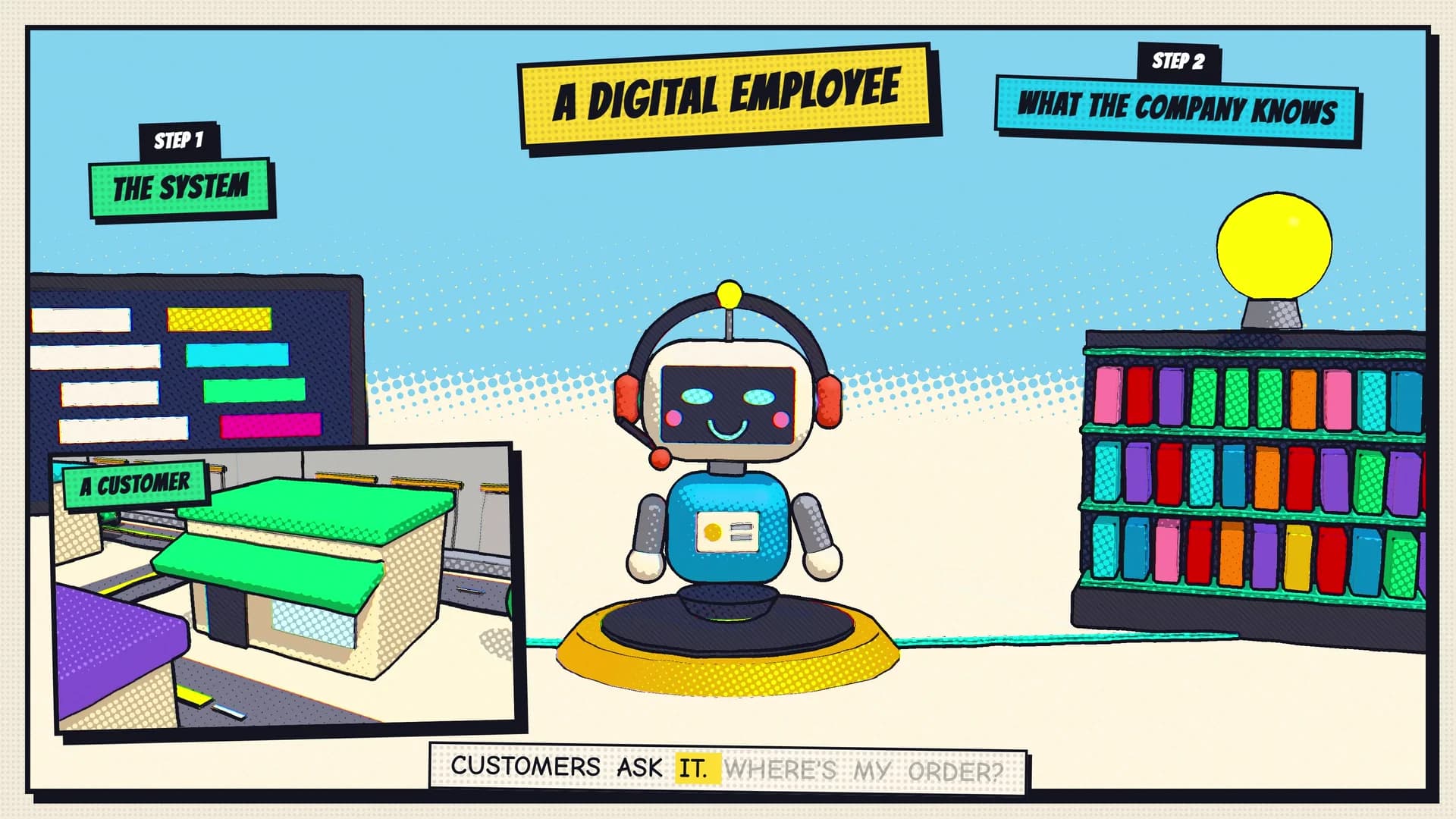
Our Sydney transport case film shows a shared system connecting jobs, people and an AI agent. A case film explains a type of work; your own tests must establish whether a proposal fits.
Ask who will do the work. Will the named AI implementation consultant build it, or hand it to other AI developers? Record responsibilities and handover points.
Have shortlisted AI consulting firms walk through an ordinary case, missing information and a failed connection. If generative AI prepares an answer, ask how unsupported claims are checked. Treat AI governance as named controls and responsibilities, not a label in a slide deck.
Agree acceptance checks and who approves them. Confirm whether correcting failed checks and retesting are included, and how new requests are priced.
Compare costs using the same assumptions
Ask each consulting firm to separate setup, recurring services, operation and later changes. Compare the same period, workload and support needs. Check currency, tax basis and billing frequency.
For each cost line, record:
- Charging basis: Fixed, estimated, usage based or excluded.
- Allowance: What volume or support time is included?
- Extra charges: What triggers them, and who approves them?
- Dependency: Which third-party services or staff time are required?
Keep unknown costs visible instead of entering zero. Request a second estimate for a busier workload, with the scope unchanged. These are planning scenarios, not forecasts.
AI implementation can still require review and maintenance. Our operational efficiency guide explains how to measure that work without treating released time as cash savings.
Confirm accounts, support and an exit route
For each service, record the account holder, administrator, billing contact and recovery contact. Ask which services receive your information, what they may do with it and how retention and removal will work.
Clarify which source files, configuration, documentation and exports you receive. Identify licensed components and supplier-managed services that cannot simply transfer. Discuss how those dependencies affect long term operation.
For an Australian team, confirm support hours and their timezone. Separate an initial response commitment from a completed fix. Name the contact for outages and routine changes.
Before acceptance, have your operator practise a normal run, an exception and the pause procedure. Check that they can access the agreed materials and export a usable copy. Unresolved access or handover gaps need an owner and a remedy before sign-off.
What should I consider when choosing an AI solutions vendor for my enterprise?
Check fit to the task, relevant evidence, delivery responsibility, acceptance, ongoing costs and account control. Apply the same questions to AI consultancy services for a small pilot or a wider enterprise project.
Record the selected option, your reasons and any conditions still to resolve. Request a narrower scope or further evidence if neither proposal meets the essential requirements. You do not need to turn two incomplete proposals into a forced choice.
Talk to Monkey Go about a task you want to scope. A general description of the process, tools and desired output is enough for an initial enquiry.